

Hey there, reader! Have you ever dreamed of building your own home but found yourself scratching your head over the numbers? If you’re asking, ” What is the cost of a 1000 sq ft house?, you’re not alone. In 2026, with prices climbing due to inflation and supply chain hiccups, it’s a hot topic for anyone planning to build. Let’s dive right in and break it down for you.
Average Costs Breakdown
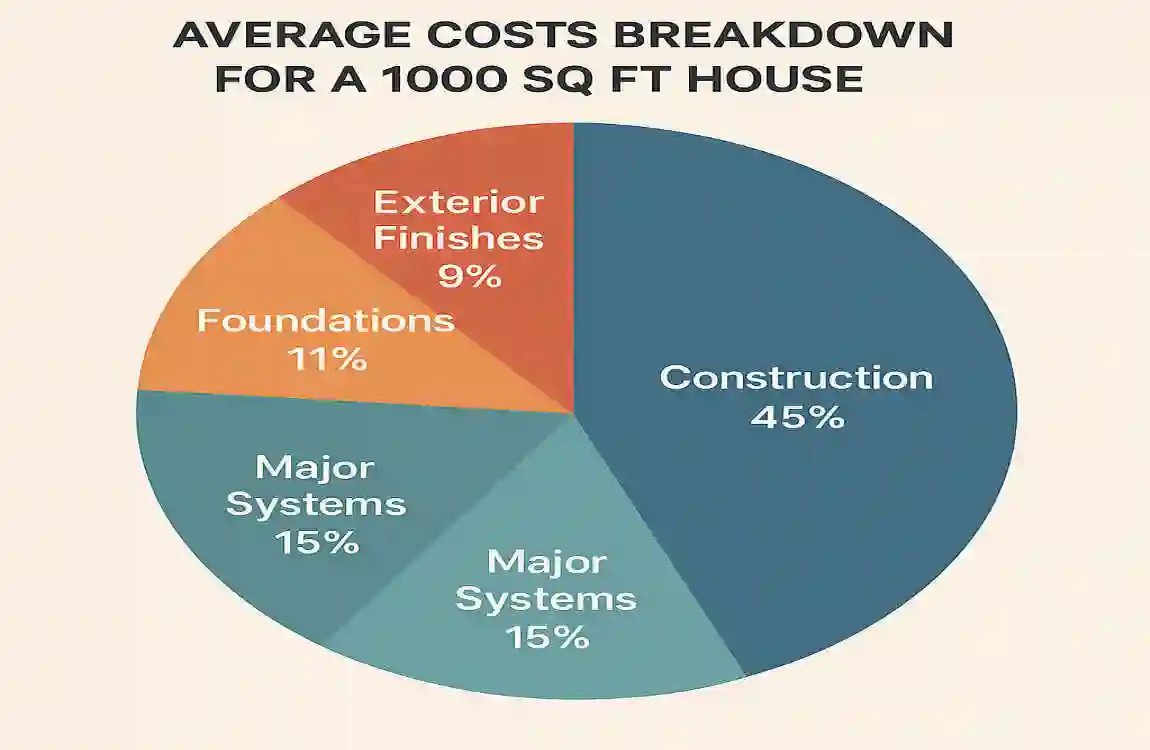
Building a house isn’t just about slapping together walls and a roof—it’s a mix of choices that add up quickly. When you ask what the cost of a 1000 sq ft house is, the answer starts with these baseline figures. In 2026, expect to pay between $150,000 and $300,000 in the US for a standard build. That’s $150 to $300 per square foot, depending on how basic or luxurious you go.
Let’s make this easy to visualise. I’ve put together a table below that compares costs across regions, including US averages and scaled equivalents for Pakistan. This way, you can see at a glance how things stack up.
Sq FtUS Average CostPakistan Equivalent (PKR/sq ft)Notes
1000 $150,000-$300,000 5.8M-8.8M PKR (scaled) Basic to Premium builds, including materials and labour.
Grey Structure $100-$200/sq ft PKR 3,000-5,000 Covers foundation, walls, and basic framing only—no finishes.
Full Finishes $250-$400/sq ft PKR 6,000-10,000 Includes flooring, plumbing, electrical, and high-end touches.
See how the grey structure is cheaper? That’s just the skeleton of the house—think bare bones without the polish. Adding full finishes raises the price because you’re layering on elements like paint, tiles, and fixtures.
Now, let’s talk about stories—literally. A single-story 1000 sq ft house might cost you around $150,000 to $200,000 in the Midwest US. But go for a double-story design, and you’re adding 50-100% more to the bill. Why? Extra materials for stairs, additional roofing, and more structural support. In Pakistan, a similar double-story setup on a 1000 sq ft plot could push costs to PKR 8 million or higher, especially with quality finishes.
Regional differences play a huge role, too. In the US, 2026 trends show sq ft pricing at about $150 in affordable areas like the Midwest. Head to the coasts, like California or New York, and you’re staring at $300 or more per square foot. Coastal regulations and higher labour rates drive that up.
Over in Pakistan, things vary by city. In Lahore or Karachi, you might pay a Premium due to urban demand—think PKR 26 million for a larger plot equivalent, scaled down to our 1000 sq ft focus. But in rural areas, costs drop significantly, sometimes by 20-30%. For budget A-quality builds, expect around PKR 6,000 per square foot for a fully finished home.
Consider this example: A family in Texas builds a basic 1000 sq ft ranch-style house for $180,000. They keep it single-story, use standard lumber, and skip extras like a basement. Meanwhile, in Islamabad, Pakistan, a similar project might cost PKR 6.5 million, focusing on durable concrete for the grey structure.
These variances highlight why location and design matter so much in house building expenses. If you’re in a high-cost area, you might opt for cost-saving tweaks early on. But don’t stop here—next, we’ll dive into the factors that influence these numbers even more.
Let’s pause and think about your situation. Where are you planning to build? Urban hotspot or quiet countryside? Knowing this can help you estimate better. In 2026, with material shortages still lingering from global events, prices are edging up, so planning is key.
For instance, US data shows a 7% increase in overall construction costs from 2025. Pakistan isn’t far behind, with labour inflation pushing total numbers higher. A double-story home adds complexity—extra plumbing and electrical work alone can tack on $50,000 in the US or PKR 2 million in Pakistan.
To wrap this section, remember that these averages are starting points. Your final cost for a 1000 sq ft house could swing based on custom choices. Up next, we’ll explore those key factors in depth.
Key Cost Factors
So, you’ve got the averages down, but what’s the cost of a 1,000 sq ft house? really boils down to a handful of prominent influencers. These aren’t just minor details—they can swing your budget by thousands. Let’s break them into manageable parts, starting with where you build.
Location Impact
Location isn’t just about the view—it’s a massive driver of construction costs. Built in a bustling city, you could pay 30-50% more than in a rural spot. Why? Higher land values, stricter building codes, and pricier labour all add up.
In the US, coastal areas like Los Angeles or Miami top the charts at over $300 per square foot. Contrast that with the Midwest, where $150 per square foot is common. Imagine building your 1,000 sq ft dream in sunny California—you’re looking at a minimum of $300,000, thanks to permits and seismic requirements.
Over in Pakistan, cities like Lahore or Karachi demand premiums too. Urban plots incur higher material transport costs and skilled labour fees, pushing sq ft pricing to PKR 8,000 or more. Rural areas? Much kinder on the wallet, often dropping to PKR 5,000 per square foot.
Think about it: If you’re in a high-demand spot, can you compromise on location to save? Many do, and it pays off big time.
Materials & Quality
Next up, what you build matters a ton: choose budget materials, and you keep house-building expenses low. Go Premium, and costs will climb.
For a basic setup, standard lumber and vinyl siding cost $100 per square foot. But upgrade to steel framing or energy-efficient windows, and you’re at $250 or higher. It’s all about balancing quality with your bank account.
Here’s a quick list of common material costs to give you an idea:
- Roofing: $10-20 per square foot—asphalt shingles are cheap, metal roofs last longer but cost more.
- Siding: $5-15 per square foot—vinyl for basics, brick for durability.
- Flooring: $3-10 per square foot—laminate saves money, hardwood adds luxury.
In Pakistan, opting for local bricks over imported tiles can shave off PKR 1,000 per square foot. US builders often recommend energy-efficient options to save on long-term energy bills.
Ask yourself: Do you need that high-end granite countertop, or will something simpler do? Small choices here add up fast.
Labor & Permits
Labour is the heartbeat of any build, accounting for 30-40% of your total cost. In 2026, expect a 7% hike due to skilled worker shortages. For a 1000 sq ft house, that could mean $50,000 to $100,000 just for the crew.
Permits add another layer—$5,000 to $20,000 in the US, depending on inspections and approvals. Skip them, and you risk fines or rework.
In Pakistan, labour might cost PKR 2,000-3,000 per square foot, with permit costs varying by province. Hiring local teams keeps things affordable.
Design & Features
Your house’s blueprint directly affects the price tag. A simple single-story design stays under $200,000 in the US, but adding a basement or extra stories can raise costs by 50%.
Custom designs are pricier than prefabs—prefabricated homes can save 20% by assembling off-site. In Pakistan, a double-story with a basement might add PKR 3 million.
Features like smart home tech or pools? They inflate construction costs quickly. Stick to essentials if you’re budget-conscious.
What features are must-haves for you? Prioritising can keep your 1000 sq ft house affordable.
Overall, these factors interplay to shape your final bill. Mix and match wisely, and you’ll land on a cost that fits.
Hidden & Additional Costs
Alright, we’ve covered the basics, but building a house comes with surprises that can sneak up on you. These hidden costs often add 10-20% to your total, so let’s shine a light on them. When calculating the price of a 1000 sq ft house, don’t forget these extras.
First off, land isn’t free. While our central figures focus on construction, buying a plot can cost $50,000 to $150,000 in the US. In Pakistan, urban land might cost PKR 10 million or more for a suitable spot.
Then there’s the utilities hookup—connecting water, electricity, and sewer lines. Expect $10,000 to $30,000 in the US, or PKR 500,000-1 million in Pakistan. Rural areas may need wells or septic systems, which can increase costs.
Site preparation is another biggie. Clearing land, grading, or dealing with rocky soil? That could tack on $5,000 to $15,000. Insurance during construction protects against mishaps and runs $2,000-$5,000 annually.
Don’t overlook overruns—budgets often exceed by 10% due to delays or changes. Weather in 2026 could push timelines and inflate labour costs.
Here’s a table outlining common hidden costs and their potential impact:
Hidden CostUS EstimatePakistan Equivalent (PKR)Potential Overrun Impact
Land Purchase $50K-$150K 10M-30M Adds 20-50% if not budgeted
Utilities Hookup $10K-$30K 500K-1M 5-10% of total build
Site Prep & Grading $5K-$15K 300K-800K Up to 10% for uneven land
Insurance & Permits $2K-$5K 100K-300K 2-5% for coverage
Contingency for Overruns 10% of total 10% of total Covers delays/inflation
See how these pile up? For a $200,000 US build, hidden costs could easily add $40,000. In Pakistan, a PKR 6 million project might balloon by PKR 1 million.
Professional fees—such as architects’ or engineers’—add $10,000-$20,000. And taxes? Sales tax on materials can range from 5% to 10%.
To avoid shocks, build a buffer into your budget. Talk to locals who’ve built recently—they’ll share real stories. Remember, these aren’t optional; ignoring them leads to stress.
What hidden costs worry you most? Planning for them now keeps your project smooth.
Savings Tips
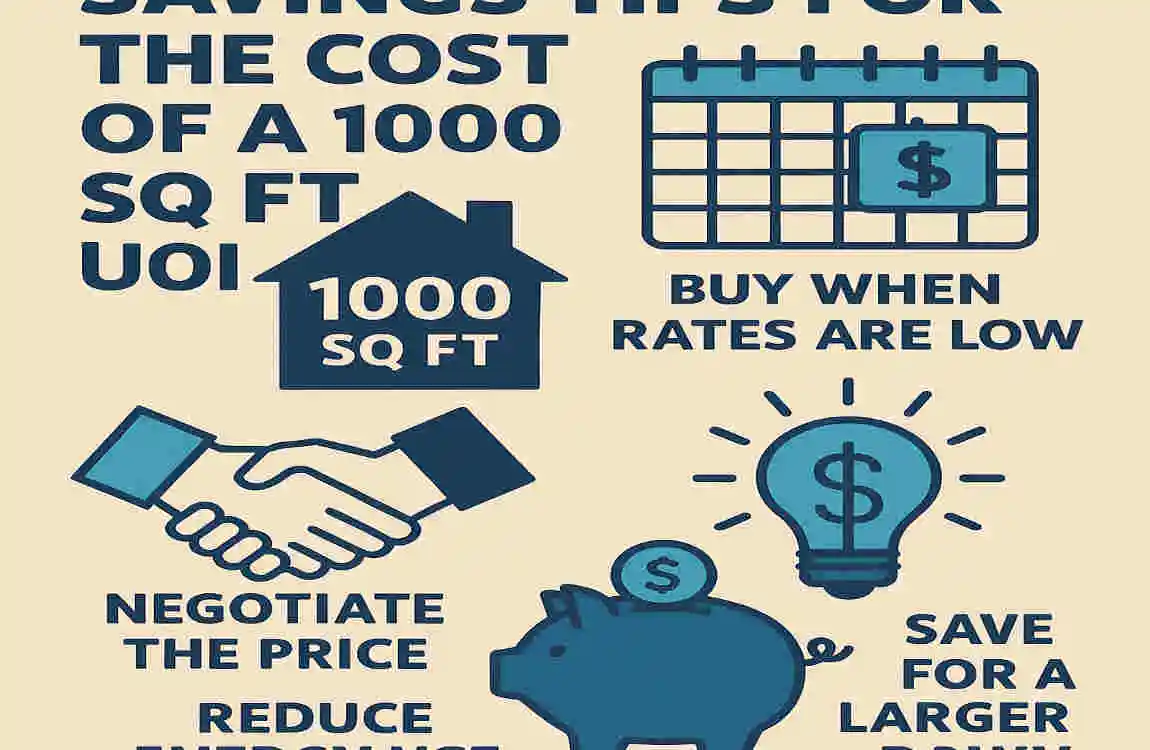
Building on a budget? Great news—you can trim the cost of a 1000 sq ft house by 20-30% with smart moves. These tips are actionable and proven, so let’s get into them. I’ll list out 10 solid ones to help you save.
- Go for Prefab or Modular Homes: These pre-built sections assemble quickly, saving 15-25% on labour and time. In the US, a modular 1000 sq ft house might cost $120,000 instead of $150,000.
- Build Off-Season: Winter or rainy months mean lower labour rates—5-10% discounts are typical. Contractors are less busy, so negotiate!
- Choose Energy-Efficient Materials: They cost more upfront but slash utility bills in the long term. Think LED lights or insulated walls for ROI in under 5 years.
- DIY Finishes: Paint handles or install yourself to save 10%. Just ensure you have the skills to avoid costly fixes.
- Bulk Buy Materials: Purchase in large quantities and haggle with suppliers for 5-15% off. Local markets in Pakistan are great for this.
- Simplify the Design: Skip extras like basements or fancy roofs. A straightforward layout keeps construction costs down by 20%.
- Shop Around for Contractors: Get multiple quotes—competition can lower bids by 10-15%. Check references to avoid low-quality work.
- Use Recycled or Local Materials: Sourcing locally reduces transportation costs. In the US, reclaimed wood saves big; in Pakistan, local bricks do the trick.
- Plan for Permits Early: Avoid delays by filing paperwork ahead—saves on extended labour costs.
- Leverage Cost Calculators: Online tools help estimate accurately, preventing overspending. Adjust for your location and features.
Imagine applying just a few of these—your 1000 sq ft house could drop from $250,000 to $200,000. In Pakistan, that’s PKR 2 million in savings!
Start small: Pick one tip and research it for your area. Many builders share success stories of cutting costs without sacrificing quality.
Energy efficiency isn’t just trendy—it’s smart. Solar panels might add $10,000 upfront, but pay back through rebates and lower bills.
For DIY fans, focus on low-risk tasks. Leave plumbing to pros to avoid disasters.
Bulk buying works best when you have storage—plan accordingly.
Simplifying design means faster builds, too, reducing overall house-building expenses.
Shopping for contractors? Use word-of-mouth for trustworthy ones.
Recycled materials add character and eco-friendliness.
Early permits keep everything on track.
Cost calculators are free and eye-opening—try one today.
With these, you’re empowered to build smarter. Which tip will you try first?
