
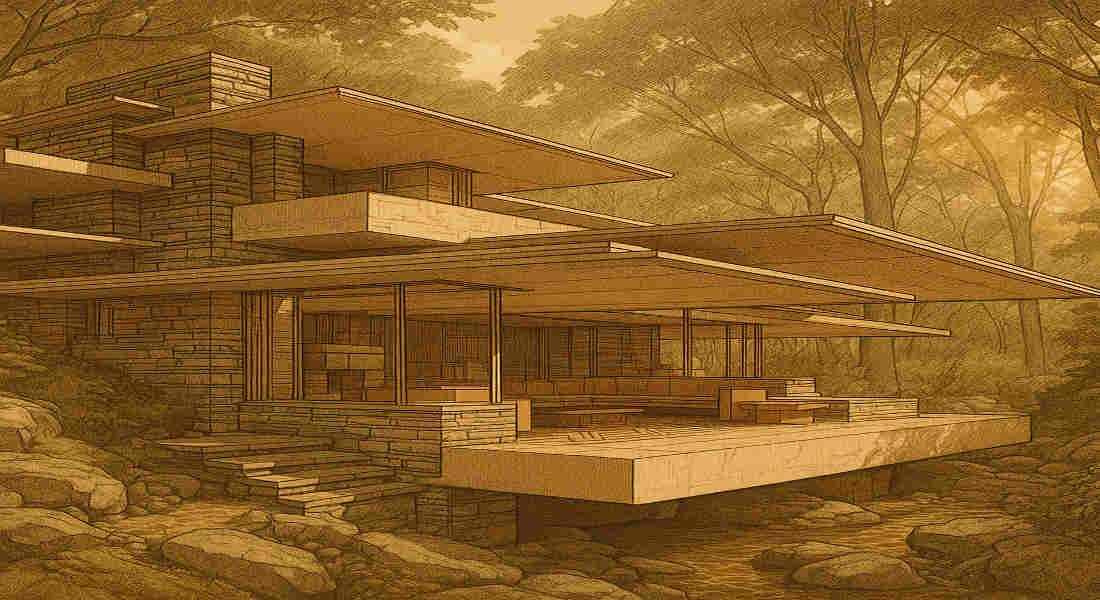
Frank Lloyd Wright’s vision of organic home architecture stands as a defining philosophy in modern design, rooted in the belief that a building should exist in harmony with its environment rather than dominate it. Far from simply mimicking natural forms, Wright’s concept of “organic” architecture reinterprets nature’s principles, using them as a guide for creating homes that are both functional and deeply connected to their surroundings. As he famously declared, “Form and function are one,” emphasizing unity between a building’s purpose, materials, and its place in the landscape.
Principles of Organic Architecture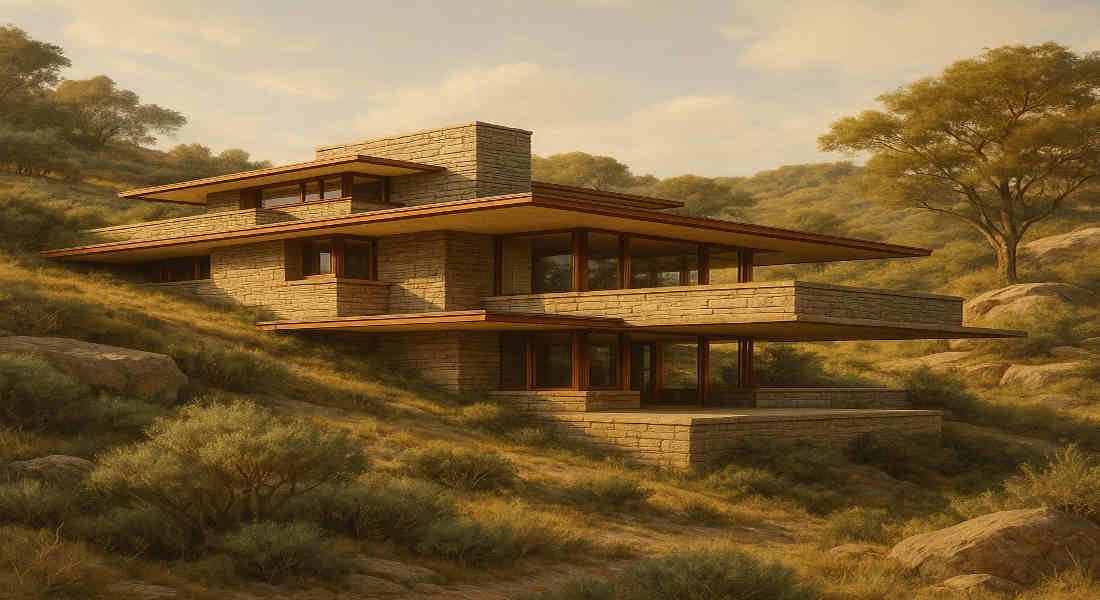
Frank Lloyd Wright’s organic architecture is rooted in principles that honor nature and human experience. At its core, it seeks to create harmony between the built environment and the natural world.
Wright believed that structures should be an extension of their surroundings. They must fit seamlessly into the landscape rather than dominate it. This idea promotes sustainability and emphasizes respect for local ecosystems.
Each building reflects its unique context, climate, and culture. This approach fosters a sense of place, making each architectural piece distinct yet connected to its environment.
Functionality also plays a critical role in organic architecture. Spaces are designed not only for aesthetic purposes but also to meet practical living needs. In this way, functionality enhances user experience while maintaining aesthetic beauty.
These principles contribute to buildings that feel alive—integrated with nature, and responsive to human activity.
Use of Natural Materials and Integration with the Environment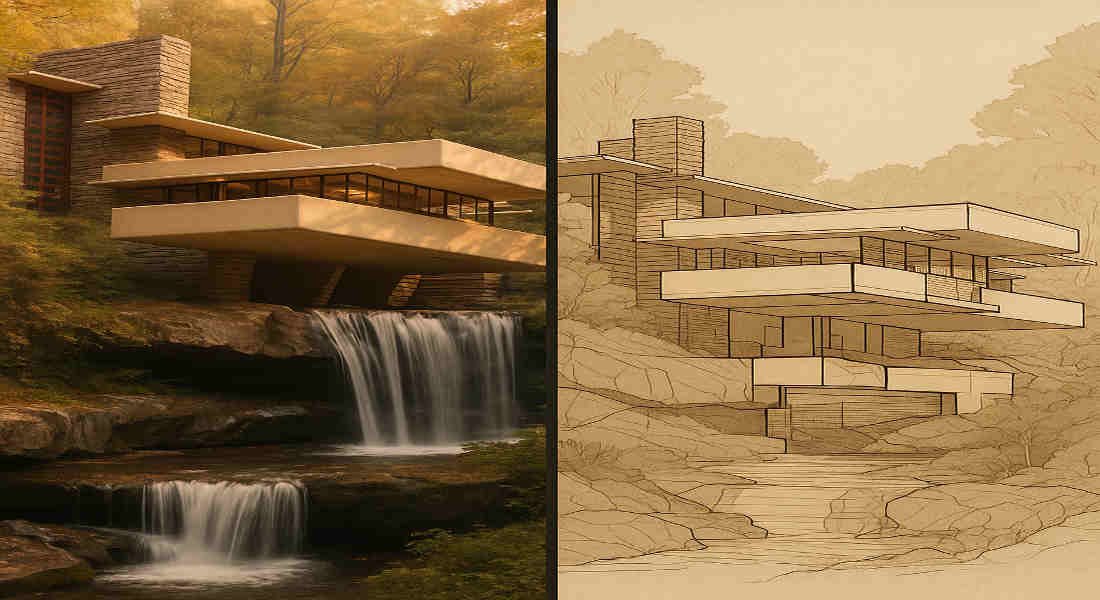
Frank Lloyd Wright’s design philosophy celebrates the beauty of nature. He believed that architecture should harmonize with its surroundings, not dominate them.
Wright often used local materials in his buildings. Stone, wood, and brick became integral parts of his structures. This approach created a seamless connection between the home and the landscape.
He emphasized transparency through large windows and open spaces. These elements invite natural light inside while providing stunning views of the outdoors. Residents feel a strong connection to their environment, which fosters a sense of peace.
By integrating buildings into hillsides or using cantilevered roofs that mimic tree branches, Wright’s designs reflect organic forms found in nature. Each structure tells a story rooted in its location.
This commitment to natural materials also enhances sustainability; it reduces transportation costs and conserves resources, making each project an eco-conscious choice for future generations.
You may also read (why is art and architecture essential for home civilization).
Emphasis on Functionality and Efficiency
Functionality is at the heart of Frank Lloyd Wright’s organic architecture. Each space serves a purpose, seamlessly blending form and function.
Wright designed homes that catered to the lifestyle of their inhabitants. He believed that spaces should enhance daily activities rather than hinder them. Open floor plans encourage movement, allowing families to flow naturally from one area to another.
Efficiency in design also plays a crucial role. Natural light floods interiors through strategically placed windows, reducing reliance on artificial lighting. This not only creates an inviting atmosphere but also conserves energy.
Wright’s attention to detail extended beyond aesthetics; he integrated practical solutions into his designs. Built-in furniture maximizes space while providing comfort and utility. Every element serves a dual purpose, marrying beauty with practicality for harmonious living environments.
In essence, functionality and efficiency are woven into every aspect of his architectural vision, making each structure unique yet universally appealing.
You may also read (what defines romanesque house architecture features).
Importance of Harmony and Unity in Design
Harmony and unity are vital components in Frank Lloyd Wright’s organic architecture. These principles create a seamless flow throughout the design, making spaces feel cohesive.
Wright believed that every element should work together. This interconnectedness fosters an environment where nature and structure coexist peacefully. Each room, window, and detail is thoughtfully aligned with its surroundings.
By integrating colors, materials, and shapes, Wright achieved a balanced aesthetic. He often drew inspiration from local landscapes to ensure his designs felt like an extension of their environment. The result is not just visual appeal; it also cultivates emotional resonance.
Incorporating harmony encourages occupants to experience tranquility within the space. It enhances both functionality and beauty while allowing individuals to connect with their surroundings on a deeper level. Every aspect contributes to a holistic experience that honors the essence of nature itself.
Incorporation of Geometric Shapes and Forms
Frank Lloyd Wright had a unique way of incorporating geometric shapes and forms into his designs. This element serves not only for aesthetics but also plays a crucial role in creating spaces that are both functional and visually appealing.
Wright often used simple, clean lines to define spaces while maintaining an organic feel. The geometry he employed was inspired by nature, allowing buildings to blend seamlessly with their surroundings. For example, the triangular roofs of some structures mimic mountain peaks or tree canopies.
These shapes also serve practical purposes, enhancing structural integrity and reducing material waste. By designing with geometry in mind, Wright ensured that each element worked in harmony with one another.
The use of geometric forms fosters a sense of order and balance within a home setting. It creates visual interest without overwhelming the senses—a hallmark of organic architecture.
This interplay between form and function illustrates what was the basic principle of Frank Lloyd Wright’s organic architecture: achieving harmony between human habitation and the natural world through thoughtful design choices.
You may also read (what defines french colonial house architecture style).
